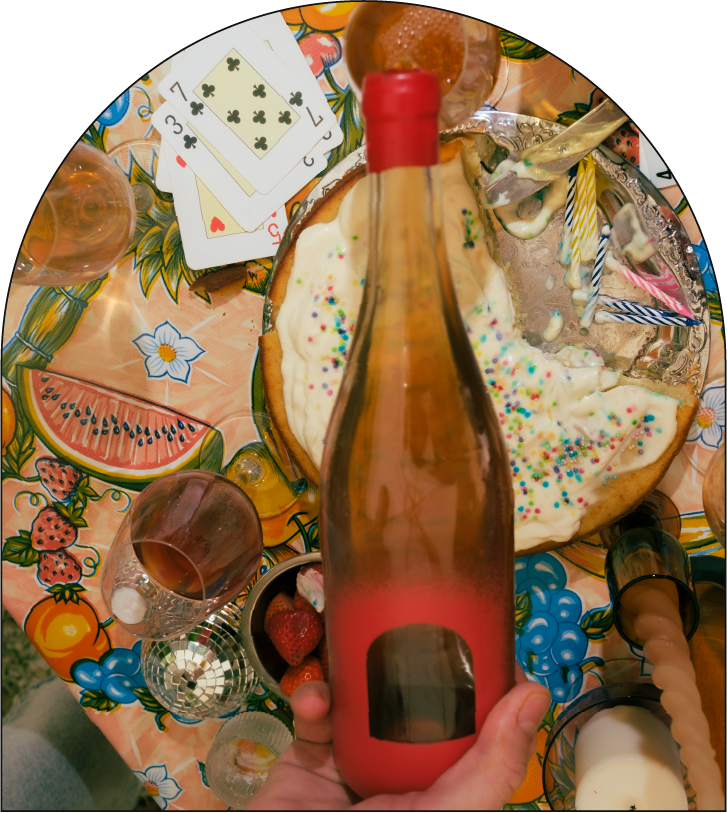
INTRODUCTION TO NATURAL WINE INTENSIVE
At Suc Suc, we want everyone to understand what natural wines are and how to speak about them. So here is a list of key natural wine terms, from the most useful to the most controversial.
WHAT IS NATURAL WINE ANYWAY?
There is no one legal definition for natural wine. The term natural wine is hotly debated, but there are certain markers that the community has accepted as important guidelines for making natural wine. Most of these guidelines are related to the “bare minimum” – as with any movement, there are natural wine sommeliers and winemakers who are much more radical in their approach!
- Sustainable viticultural practices – meaning no synthetic chemicals like pesticides or insecticides in the vineyard
- Understanding grapevine ecology – meaning the vineyard is worked as an ecosystem, and soil treatment, water usage, and other non-invasive farming practices are considered wisely
- No artificial yeasts or bacteria – meaning the fermentation takes place on its own (spontaneously), carried out by the wild yeasts of the vineyard and the cellar
- Minimal intervention– meaning that any enological techniques employed in the cellar are physical treatments (racking, batonnage, punchdowns, etc.) instead of chemical or biological treatments
- Low or no sulphur dioxide – meaning, let’s try our best to keep it as clean and honest as possible, and not abuse corrective additives
Still, we are by no means the authority on what natural wine is! Just like conventional wine, natural wine refers to a wide range of practices, that result in an even wider range of flavours in the bottle. So, to start with, how is natural wine made?

NATURAL WINE VINEYARDS
ORGANIC:
Like any other cultivar, organic viticulture refers only to the grape-growing process. Organic grapes are grown without any synthetic or abusive chemical products in the vineyard. There are multiple certification organisms for organic grapes worldwide, each with different rules.
BIODYNAMIC:
Biodynamic viticulture is a controversial anthroposophical system. It was coined by the Austrian thinker Rudolph Steiner in the first half of the twentieth century. However, agriculture was only one small part of Steiner’s philosophy.
BIODYNAMIC VITICULTURE INVOLVES:
- Understanding the vineyard as an interconnected ecosystem.
- Preparing homoeopathic solutions that stimulate certain energies in the soil and the plant.
- Working alongside the lunar calendar for certain farming and winemaking processes.
DEMETER:
Demeter is the biggest biodynamic certifying body in Europe. Unlike organic viticulture, it requires fewer additives in the cellar, which makes biodynamic wines more likely to be natural.
PERMACULTURE:
Permaculture is a system of agriculture developed in the 1970s. Permaculture is a whole-systems approach that tries to approximate a natural state for the vineyard. As a result, the permanent imprint on the surrounding environment is minimal.
DRY FARMING:
Dry farming is an approach to viticulture that doesn’t use any form of artificial irrigation not to deplete water supplies. In some regions, irrigation is already banned, but in others, irrigation is permitted. With climate change making wine regions drier and drier, and water more and more scarce, the debate over the need for dry farming will increase.
TERROIR:
In the world of fine wine, Terroir is the concept that a wine’s taste should reflect its origin. Climate, soil type, vintage, physical surroundings, and the decisions of winemakers during the vinification process are all part of this idea. Some say natural wines are better at expressing this link with the terroir – and detractors say that natural wines obstruct terroir, or simply that terroir doesn’t exist.

MAKING NATURAL WINE
ORANGE WINE:
Orange wines, also known as amber wines, are made from white grapes left in contact with the skins for an extended period, gaining an orange hue, a stronger structure, and aromatic qualities.
In antiquity, all white wines would have been orange wines. Today orange wines are back in style, especially among natural wine drinkers, due to the resurgence of respect for the Georgian tradition of winemaking and pioneers like Stanko Radikon in Fruili-Venezia-Giulia. Careful, though! Not all orange wines are natural – and not all natural wines are orange.
SKIN CONTACT:
Skin contact, also known as maceration, means leaving the grape skin in with the grape must before, during, and even after fermentation. The longer you leave skins in with the grape juice, the darker, stronger, and more tannic (astringent) the wine – both in the case of red grapes (rosé through to red) and white grapes (see: orange wines.)
PÉT-NAT:
Pét-Nat is short for Pétillant Naturel and is known as the Ancestral Method. Pét Nats are sparkling wines made with one single spontaneous fermentation started by native yeast. Since wine produces its own CO2 as a subproduct of the natural fermentation, a Pét-Nat is bottled to trap the natural gas. The bottling during the fermentation also traps the yeast inside the bottle, so later, the sediment can be disgorged (expulsed) if desired.
AMPHORA:
Amphoras are big clay vessels that are becoming more and more popular among natural winemakers. Amphorae represent a return to the old way of doing things.
In Georgia, Amphoras are called Qvevri and in Spain, tinajas. Some say that aging in an amphora brings a certain earthy and smoky quality to a wine. But not all amphora wines are necessarily natural.
NATIVE/AMBIENT YEAST:
Unlike commercial or industrial yeast, which are lab-grown, dried, and sold in packets, ambient yeast are natural microorganisms that float in the vineyard and the cellar. Ambient yeasts, mainly Saccharomyces Cerevisiae, will kickstart a spontaneous fermentation if you don’t sterilize them away. Using native yeasts is a prerequisite for natural winemaking. In a spontaneous fermentation, dozens of wild yeasts and bacteria will ferment the wine in different ways (hence the fun of natural wines) instead of choosing one specific commercial strain.
SOUS VOILE/BAJO VELO:
Sous voile or bajo velo is a style of wine with specific flavours and mouthfeel due to aging under a layer of yeast known in French as the voile and in Spanish as the velo. Wines under the veil are thinner due to a lack of glycerin and with noticeable almond and white flower notes.
Fino or Manzanilla sherry and Vin Jaune from the Jura are the most famous examples of sous voile or bajo velo. These are amazing wines, loved by natural wine people – but are not always natural wines.
CARBONIC MACERATION:
Carbonic maceration is a winemaking technique characterized by flavours of banana red candies. Carbonic maceration makes hyper fruit-forward wines primarily drunk young (but not exclusively!). It’s a complicated process that involves putting whole clusters of grapes in an oxygen-free environment for fermentation so that the grapes ferment inside their own skins.
The most widely known example of Carbonic maceration is Beaujolais Nouveau. Carbo, as it can be called for short, is popular in natural wine circles, but not all carbonic wines are natural.
SULFITES:
SO2 is a hot topic for debate in natural wine circles. Chemically known as sulphur dioxide, sulfites are an antioxidant, anti-microbial substance used as a hygiene and conservation agent in winemaking. Technically, sulfites are an allergen and toxic in high doses. Therefore, the European Union sets upper limits to the use of SO2.
However, even in small doses, sulfites can make wines more precise in the face of “faults” and less prone to oxidation. At the same time, some people argue that sulfites kill a natural wine’s lively spirit and energy.
For this reason, some natural wines only contain the SO2 produced naturally through the fermentation process, with no sulfites added. Other wines have small doses of added SO2 and still claim to be natural. The question is, do all natural wines have to be sulfite-free? (In our opinion, there are more important problems in the world of natural wine.)

NATURAL WINE “FAULTS”
VOLATILE ACIDITY OR VA:
Volatile acidity (VA) refers to two chemical compounds, acetic acid (vinegar) and ethyl acetate (nail polish remover). There are multiple ways for VA to occur in natural wines: too much oxygen, too much heat, and a slow, unruly malolactic fermentation, amongst others.
In very high doses of VA, the wine tastes like vinegar. In low to moderate doses, it can help a heavy wine feel fresh. Every person has an individual level of tolerance to VA.
MOUSE/MOUSINESS:
Mousiness is the most famous natural wine flaw lately. They say the name comes from its distinctive taste of mouse cage (in French, goût du souris). Having never tasted a mouse’s cage, we cannot confirm or deny it. Other descriptors for mousiness are sausage casing, peanuts, wet paper, and vomit.
Mouse has no active smell but is found in the aftertaste a few seconds after drinking since it is activated with the temperature and the PH in our mouth. Small doses of sulfites usually help avoid the development of tetrohydropiridine (THP), the chemical compound supposedly responsible for the taste. Also, 30% of people cannot taste mousiness in a wine – lucky, lucky folk.
BRETTANOMYCES OR BRETT
Brettanomyces is a secondary family of yeasts that can ferment the sugars in the wine. Brett, for short, are used widely in beer brewing and highly prized in certain older Italian and Spanish wines. When Brettanomyces ferment a wine, they cause strange flavours like horsey or barnyard flavours. Like it or leave it.
REDUCTION OR REDUCTIVE
When a wine is starved for oxygen during the fermentation or aging process, the sulfur compounds come into play. And because oxygen is the enemy of natural wine, many natural winemakers choose to work with reductive processes, meaning simply, without oxygen.
Unfortunately, these sulfur compounds (reduction) have hard-to-swallow flavours like rotten eggs, cabbage, burnt matchsticks, and yes, even farts. The good news is that reduction has a simple solution: give it air! To remedy reductive flavours in natural wine, give it a good swirl in the glass, or decant it.
OXIDATION OR OXIDIZED
When a wine gets too much oxygen during the fermentation or aging process, it risks becoming oxidized. Natural wines are especially prone to oxidizing because they have no conservation agents added. Oxidation in natural wines results in dull fruit flavours and duller colours. Unlike reduction, there is no return from an oxidized natural wine – unfortunately, the wine is dead.

NATURAL WINE DESCRIPTORS
0/0 OR ZERO/ZERO
Zero/zero is how natural wine drinkers refer to wines without additives, not even SO2. Loosely understood as nothing added, nothing taken away.
GLOU-GLOU:
Glou-glou is a term from the French: an onomatopoeia for the sound you make while gulping down a delicious bottle of wine. A glou-glou wine is a wine that’s easy to drink, light, fruity, tasty, and smashable. Usually, it’s a very light red wine or a fun, juicy white: all of the favourite styles of natural wine drinkers.
FUNKY OR FUNK
Funky is a complicated term because everyone uses it in their own way. Generally, a natural wine is funky if it clearly breaks with the classic standard of taste set by the wine industry. Maybe it is more acidic, and perhaps it is reductive or has brett, or maybe it is just much juicier. Funky has no specific meaning, but the idea is essentially that the wine is fun.
GREEN:
Green wines – or wines with green tannins, to be more technical – are wines made from grapes whose stems, skins, and seeds hadn’t fully ripened at the time of the harvest. Natural winemakers in hot climates will sometimes pick grapes this way on purpose to maintain a higher level of acidity. However, with long macerations of underripe grapes, wines can become green: astringent, rough, and sharp in mouthfeel.
ELECTRIC OR VERTICAL ACIDITY:
Electric and vertical don’t seem like wine words. However, natural wine sommeliers sometimes use them metaphorically to describe wines with high acidity. Natural wines are often very fresh for reasons related to trends and style – and this electric or vertical acidity is why.
CLOUDY NATURAL WINES:
When a wine is unfiltered or unfined, it will be cloudy. Filtration is an invasive physical process involving ridding the wine of its particles. Clarification or fining is a chemical process that uses coagulating substances, like gelatin or egg whites, to collect and filter out even smaller particles. These substances make some wines not vegan and all natural wines, being unfined, vegan.
Cloudiness in wine shouldn’t be scary since it’s natural! There are other ways of making a natural wine transparent that don’t involve filtering or fining, such as racking and cold bottling.

OTHER NAMES FOR NATURAL WINE
MINIMUM INTERVENTION:
Wines that might not be fully 0/0, but keep things as natural as possible in the winemaking process.
CLEAN WINE:
Clean wine is a greenwashed term invented by Cameron Diaz. It’s fundamentally meaningless because there are no real principles to clean winemaking.
LIVING WINE:
Natural wines are often called living wines because the microorganisms responsible for fermenting the wine (yeast and bacteria) have not been sterilized. Natural wines also evolve quickly in the glass and the bottle, making them feel alive.
RAW/REAL WINE:
Natural wines can be called raw wines because they haven’t been adulterated or altered by chemical additives. Natural wines are more honest, direct, naked, raw, and real.
FREE WINE:
Natural wines can be called free wines because they are free from additives and the constraints of appellations and denominations of origin. As a result, natural wines have fewer rules and allow for creative expression in the winemaking process.
TARJETA DE REGALO - INTRODUCCIÓN AL VINO NATURAL
TARJETA DE REGALO para un curso jugoso sobre vino natural para iniciarse en la cata y la cultura de vino natural. Pack de 2 clases: Vino vs. Vino Natural y (Des)aprender la cata del vino natural.