Work in progress wines
NAME: WORK IN PROGRESS
VINTAGE: 2022
VARIETY: Garnacha
ORIGIN: Arnes, Terra Alta, Catalunya
CLIMATE: Mediterranean with continental influence
SOIL: calcareous clay at 500 m altitude
VITICULTURE: Formally industrial and machine-worked, currently in recuperation
VINIFICATION: 3/4 with 24 hours of “intense maceration”; 1/4 “direct press”
ALCOHOL: 13,95% vol.
AGEING: 6 months stainless steel on its lees with no racking
BOTTLING: no filtering, no fining, no sulphur with a small pump and an old manual bottler.
SERVE: chilled!
THE STORY OF HOW IT STARTED
The story of Work in Progress is the same story as how Suc Suc as an educational project came to be. Our friend Pol from La Fleca Vins i Vinyes kindly gave us some grapes in exchange for our winemaking “expertise” (despite us never having made our own wine before… his gamble, his loss!)
On the way back to Barcelona after the harvest, high on the fumes of fermentation and a Beyoncé-inflected Alien Superstar frenzy (lot number: WIP WIP), we put together the first blueprint for what came to be Suc Suc, our education hub for natural wine.
In other words, we never set out to be winemakers – it was an accidental blessing. As natural wine sommeliers and teachers, this new venture felt particularly exciting, because it forced us back into the classroom.
We thought we knew what there was to know about glorious spontaneous fermentation and juicy, glou-glou wines, but we were humbled by the process.
Thus, the name: Work in Progress. Why? Because next year, we will do some things differently. Read on to find out what we learned from this first year of winemaking.
THE STORY OF HOW IT WAS
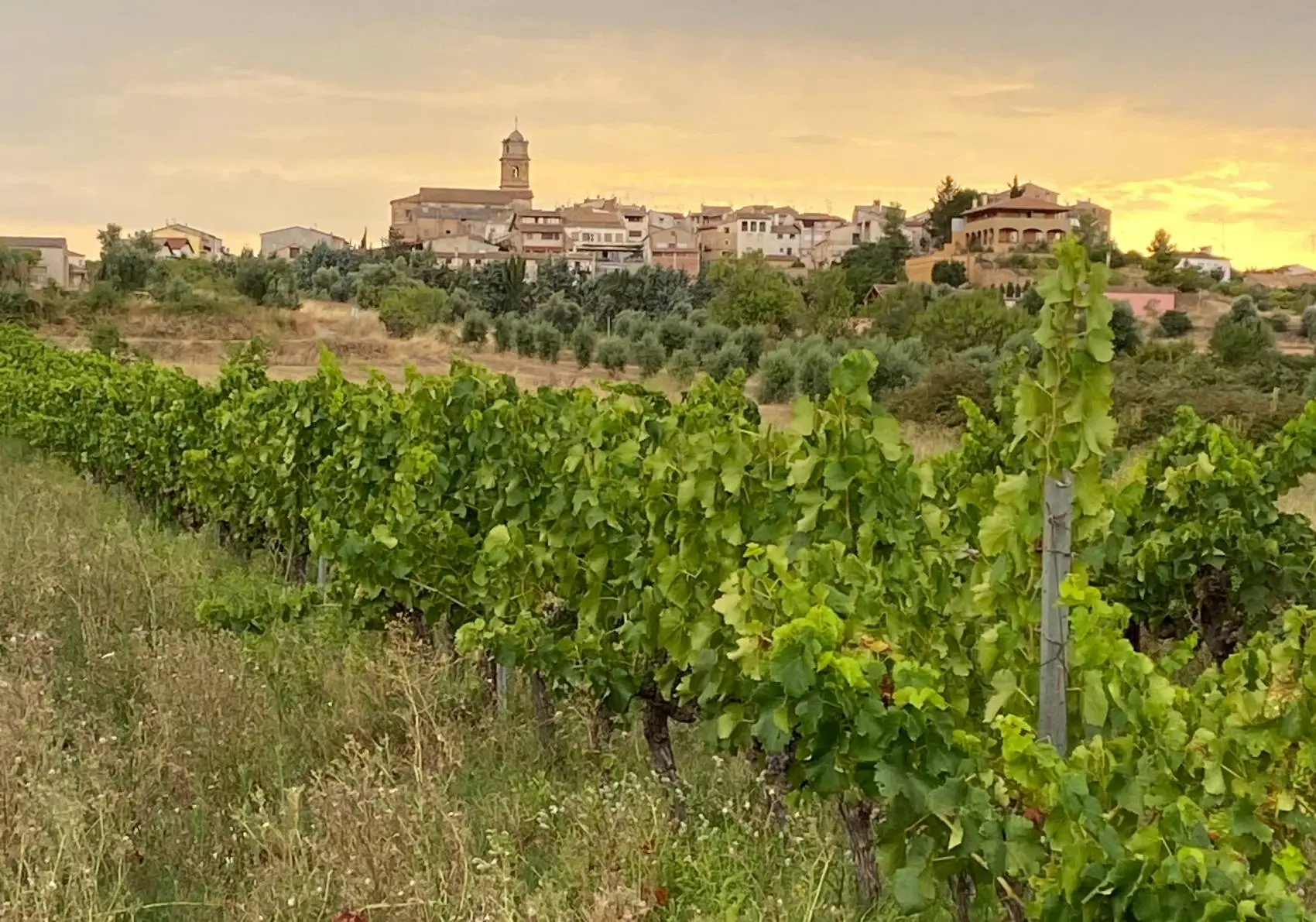
The two vineyards that birthed Work in Progress (and several other delicious wines) are amongst the only ones left in Arnes, a little village right on the border between Catalunya and Aragón. We’ll be honest with you: they were planted and farmed with an industrial mindset from the get-go, and we assume they’ve seen lots of chemicals and machinery and little tender love and care.
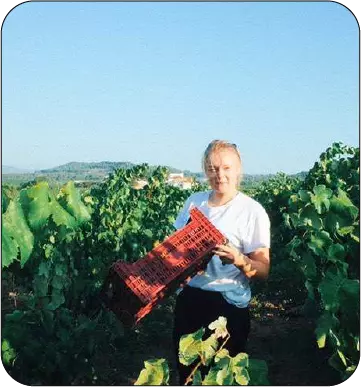
Later, when grape prices dropped as low as 0,18€ a kilo, it was no longer worth it for the original farmer to farm. The vines were abandoned for a few years, meaning no chemicals, but no upkeep either. Ida still has nightmares from the first round of pruning she did.
The Garnacha plots were and still are very uneven, with an unclear trajectory towards grape maturity, which may or may not have bitten us in the bum. There’s still a long way to go into making these vines happy campers for future harvests, but we love them anyway.
THE STORY OF HOW IT WENT
Harvest in Arnes is always later than the rest of Catalunya, because of its high altitude and continental-tinged climate, which causes a significant drop in temperature at nighttime during the summer, slowing down the sugar ripening. In other words: neither you nor the grapes are sweating through their sheets in August (unlike in Barcelona).
When all our friends had already finished the harvest in mid-September 2022, we finally got the call from Pol. At the that point, the grapes were coming in at 11,8% of probable alcohol, just about half a degree lower than what we were hoping for.
Because of a thousand responsibilities, a hundred jobs, and one very needy dog, the harvest took place on what we would call in Spanish under “luna pudiente” – basically the moon of whenever-you-can-make-it-happen which was about two weeks after receiving Pol’s call.
We had a total of 48 hours before life beckoned us back to Barcelona – so what did we do? The only thing we could: a short but highly effective maceration on the skins, which puts Work in Progress 2022 somewhere in between the categories of rosé and light red.
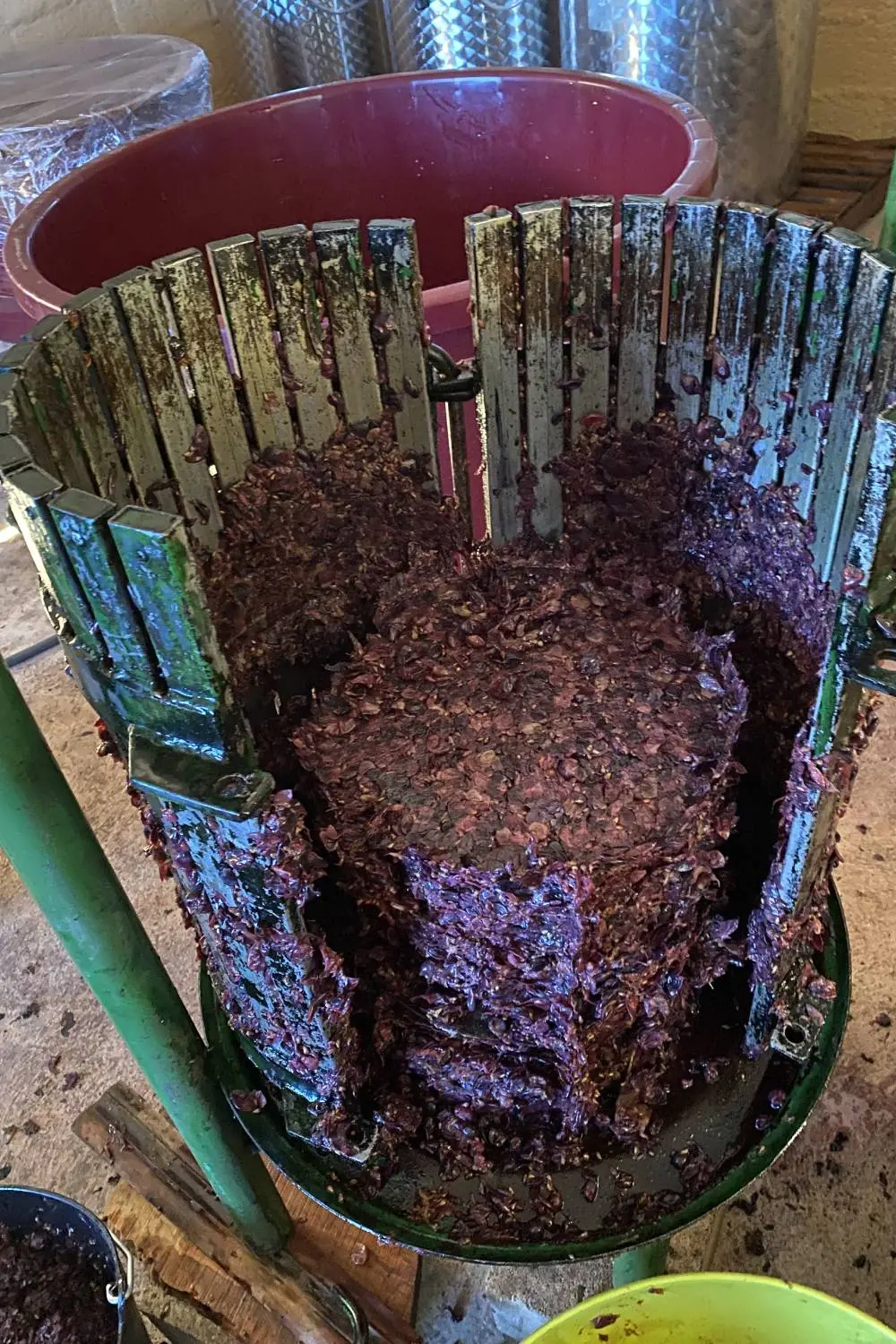
We stomped three quarters of the grapes like our life depended on it for 3 hours (thank you again Beyoncé) and left them overnight covered in plastic. We harvested a bit more the next day and pressed that “directly”, together with macerated grapes. We say “directly”, because that old 100-litre basket press can’t really press anything “directly”.
But hey, that’s what happens when you make wine in a repurposed chicken coop. (By the way, the door was only delivered halfway through harvest and installed after we left. All under control.)
THE STORY OF HOW IT CAME TO BE
Approximately five months later, we decided to analyse the wine, for the sake of radical transparency but also as a learning moment.
There were plenty of pleasant surprises, for example, no volatile acidity to speak of, and a decent total acidity of 6,53 gr/L. There were also more surprising surprises. For example, in the end the wine came in at a whopping 13,95% of alcohol by volume – much higher than we had anticipated from the original density test. The 10-day wait between the call and our arrival in Arnes was obviously a critical one.
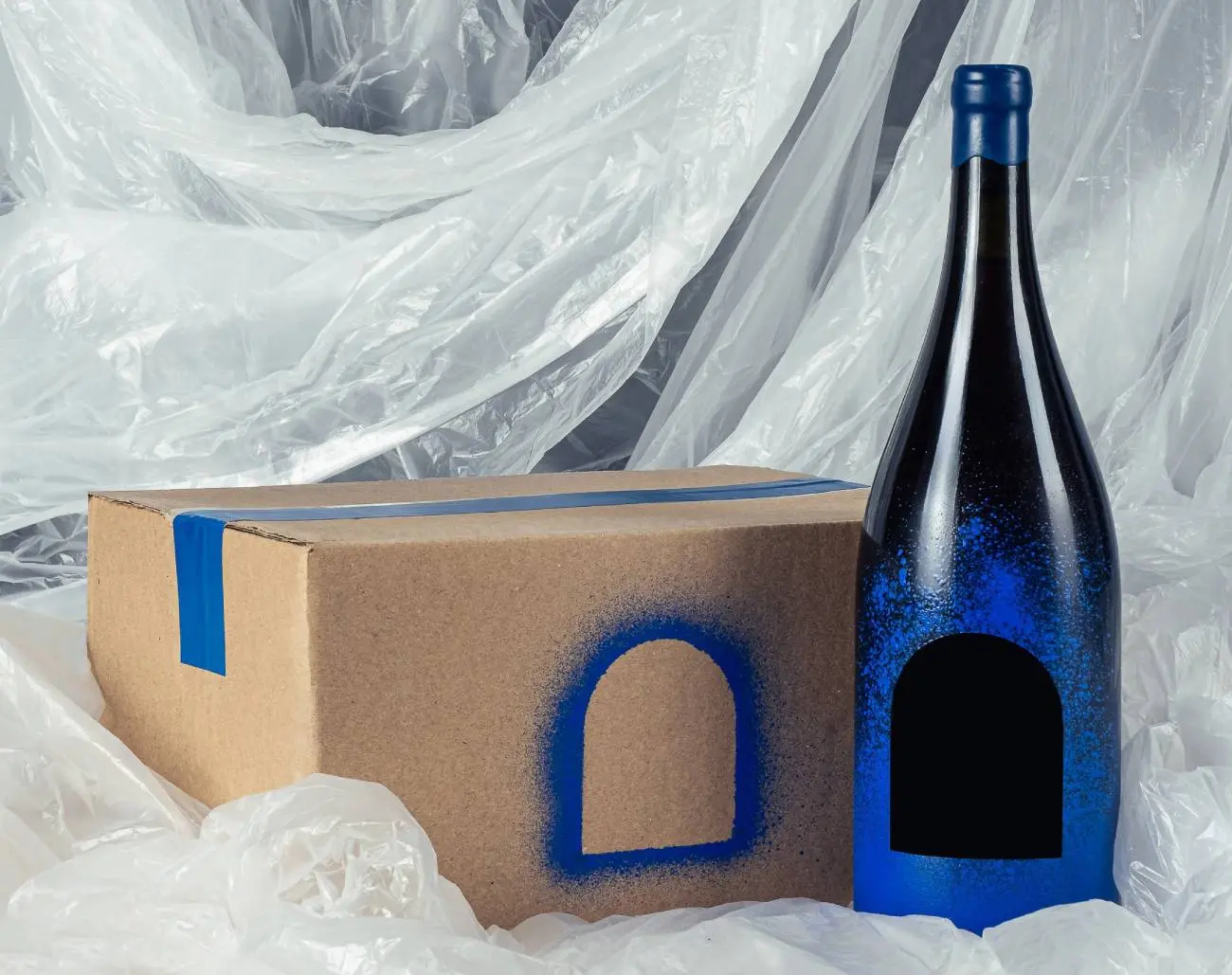
Bottling in late April was also an exercise in “whenever we can”. Suc Suc had taken off by this point, and we were busy teaching about tasting natural wine and creating wine lists for new natural wine bars in Barcelona. We whisked our 225 bottles and 12 magnums back to the city right afterwards and hoped for the best.
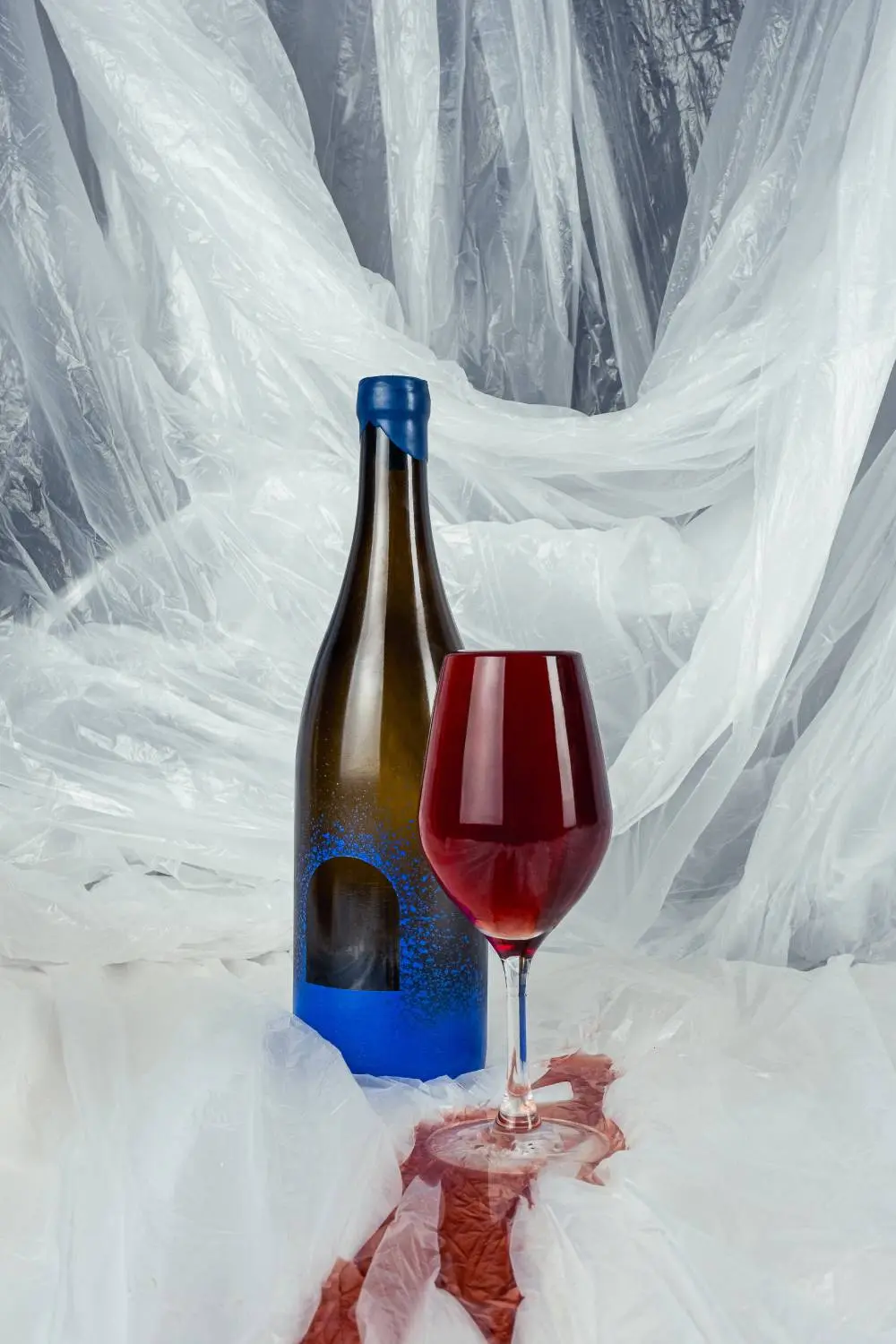
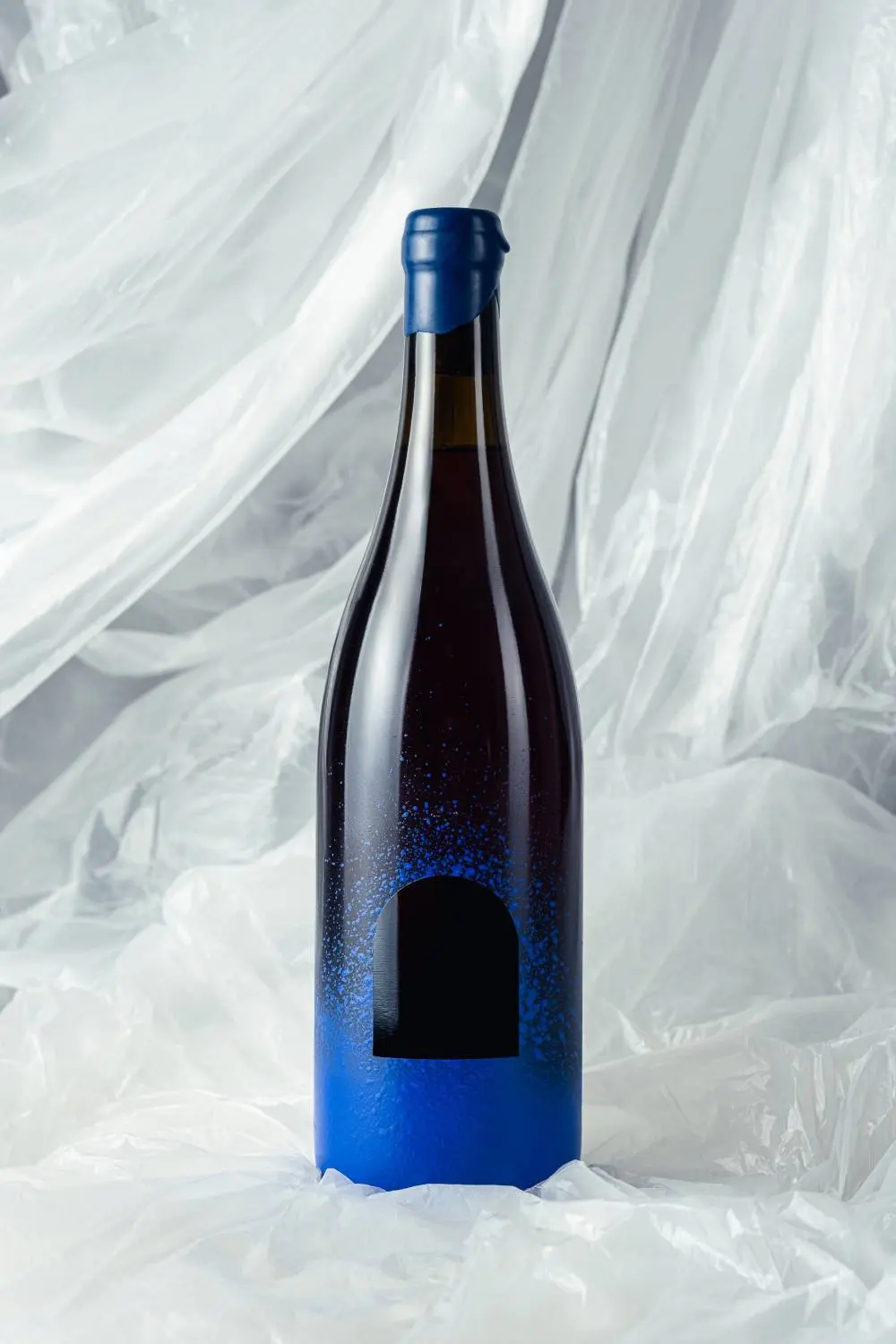
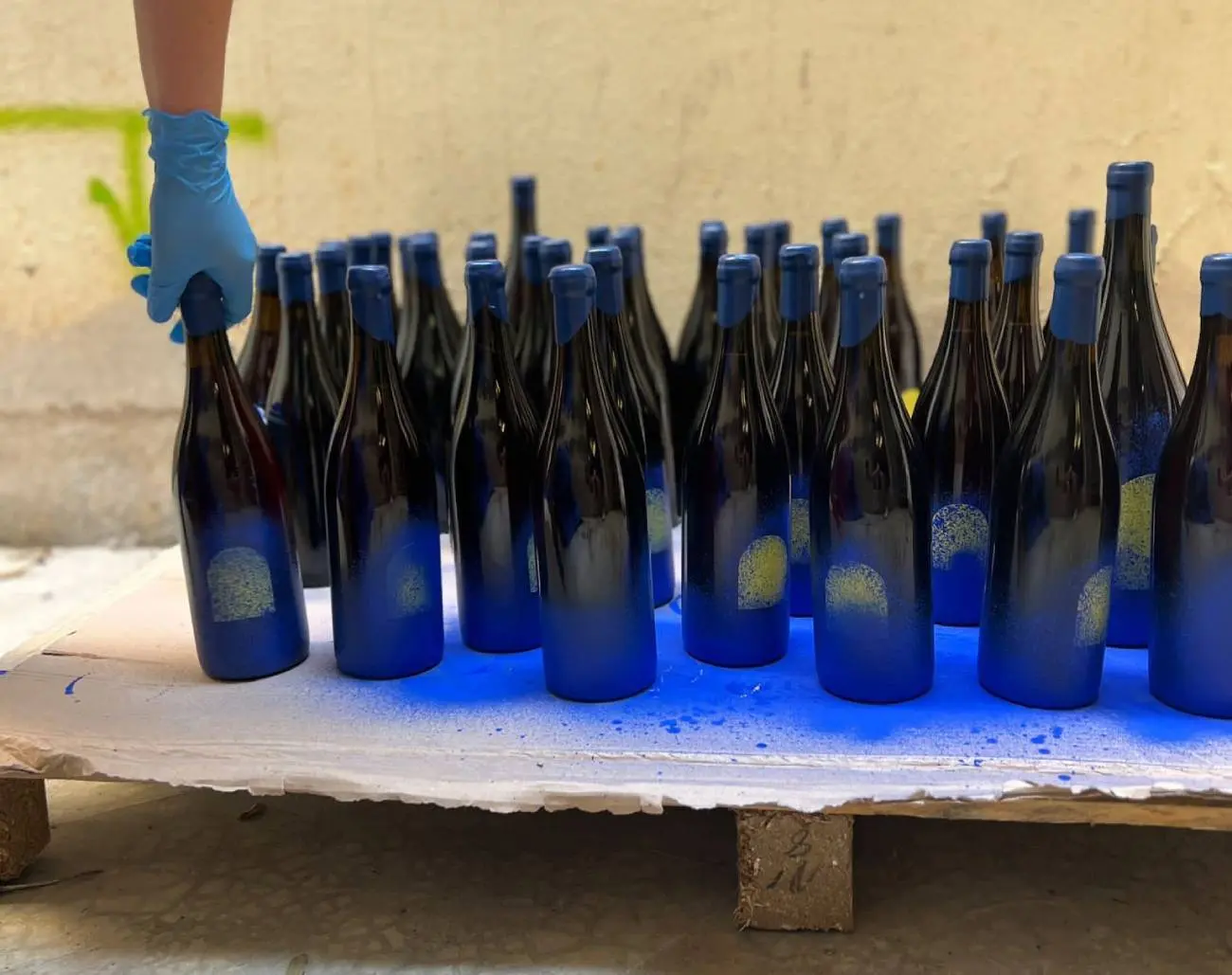
June brought two full days of waxing and spray painting the labels (idea by our fabulous graphic designer and artist extraordinaire Evelin Toledano. And thus, the bottle as you have stumbled upon it.
All in all, the process was as romantic and beautiful as it was hectic and crafty. But hindsight is also 20/20, and as teachers of natural wine, we are taking this year’s wine as a lesson. For us, winemaking is, quite literally, a Work in Progress.
THE STORY OF HOW IT’S GOING
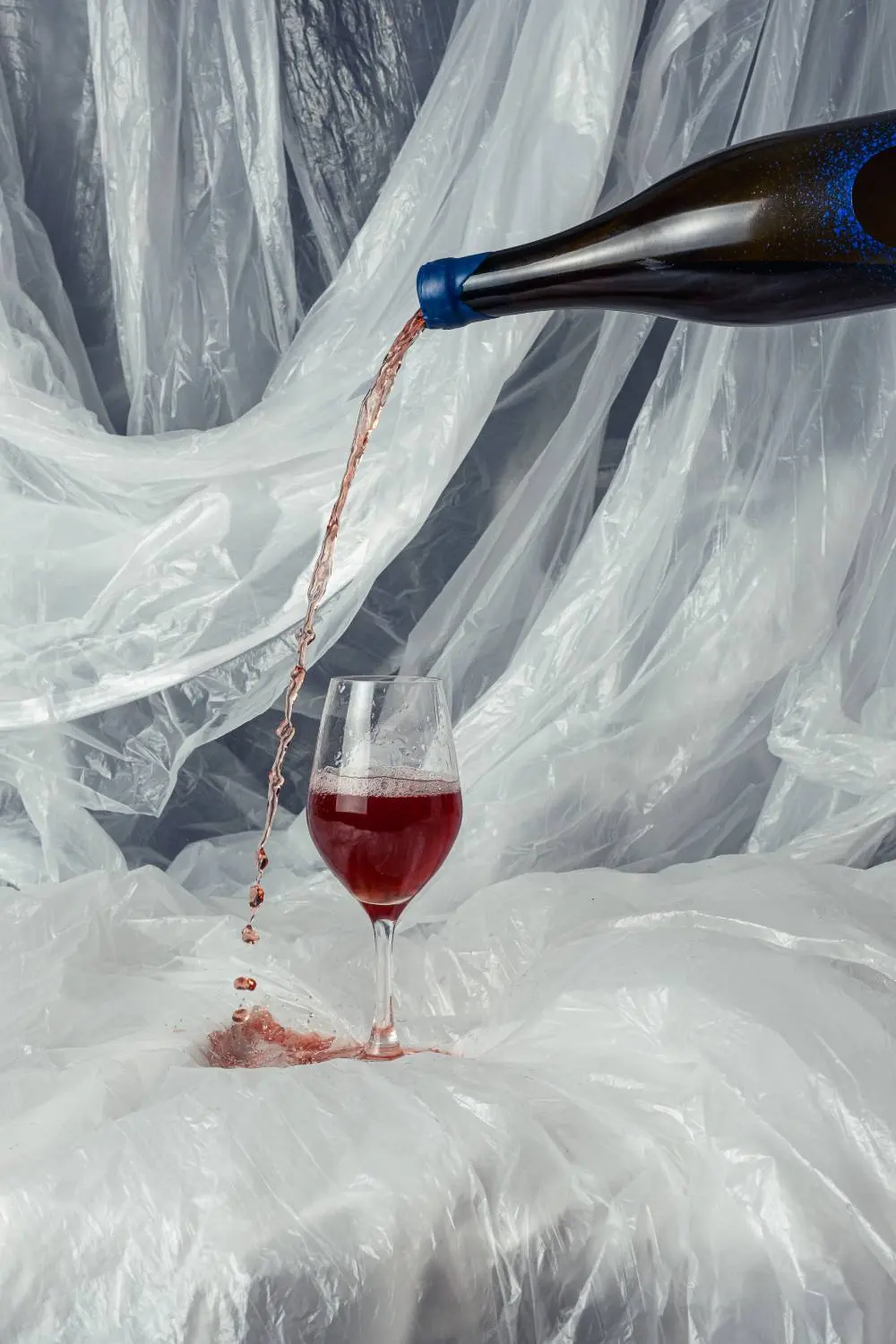
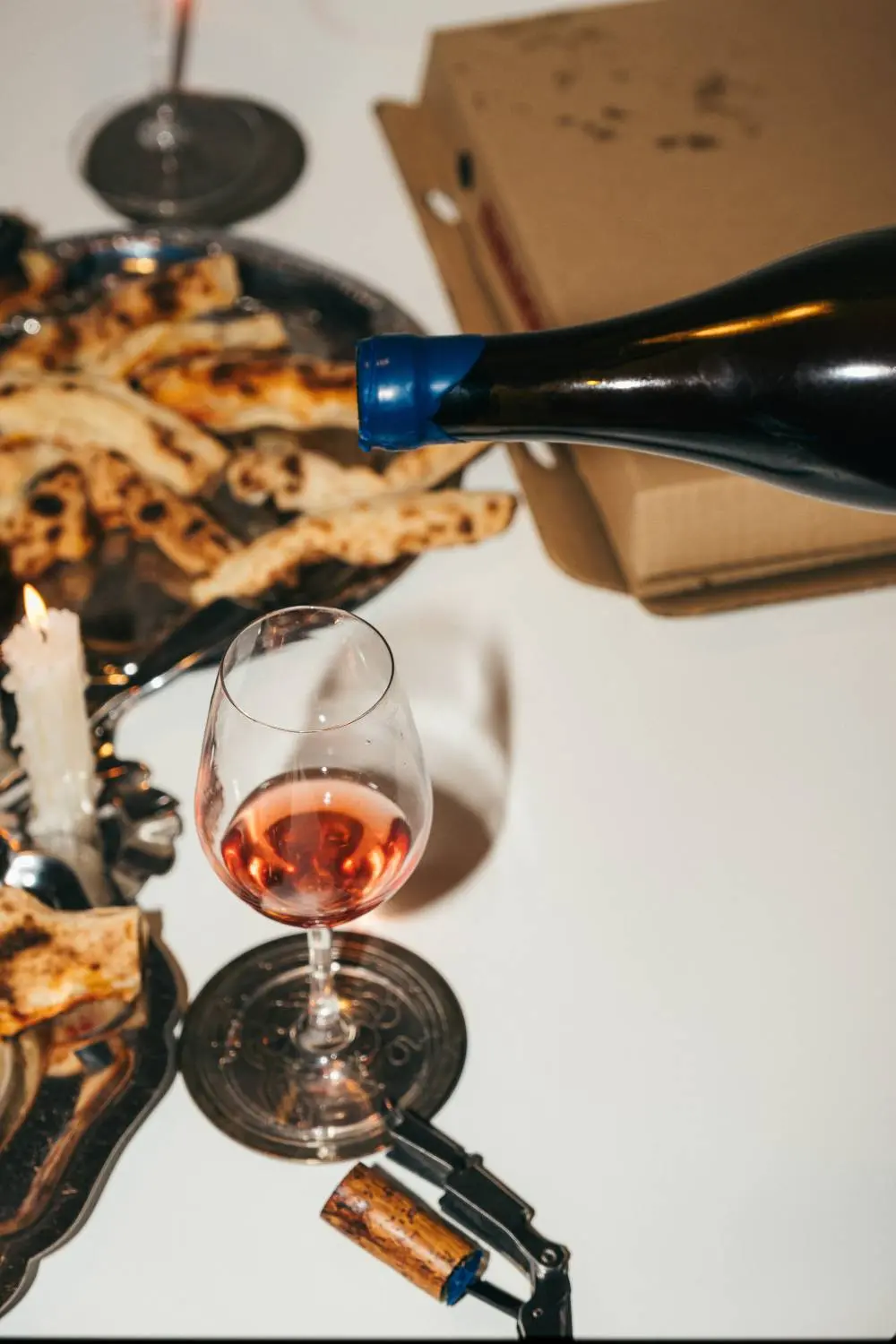
The first thing we notice upon opening the bottle is that, visually, it’s exactly what we were hoping for: a lighter version of the deep-cherry Garnacha red. Knowing the fruit-forward, supple character of the grape, we had always aimed for a wine of this body. Sipping it, we’re happy—the structure is bang-on.
Or rather, it would be… if it were a degree less alcoholic. Because the wine is fundamentally light-bodied, its heat sticks out in the throat. Ideally, we would want either a little more body or a little less alcohol. But hey! Beggars can’t be choosers.
This heat is reflected in a compote nose, even slightly peppery, which we (personally) find quite interesting – but yes, we know, it’s a little out of whack for a wine with this kind of weight.
Thankfully, the total acidity is great, which makes the whole thing fresh and drinkable. Still, we would be remiss to call the wine truly glou-glou.
Because of the old-school bottling machine and tiny little pump, we also believe the wine saw some more oxygen than it should have. Not enough to oxidize it, but yes enough to erase a bit of the fruit-forward character it had in tank.
Plus—unfortunately—we only realized after corking that the machine didn’t fill the bottles evenly, leaving a bit too much room for air in some. Rookie mistake!!!!
Still, as they say: no one is more critical of a child than their parents, and as WIP’s parents… wait, what? They don’t say that?
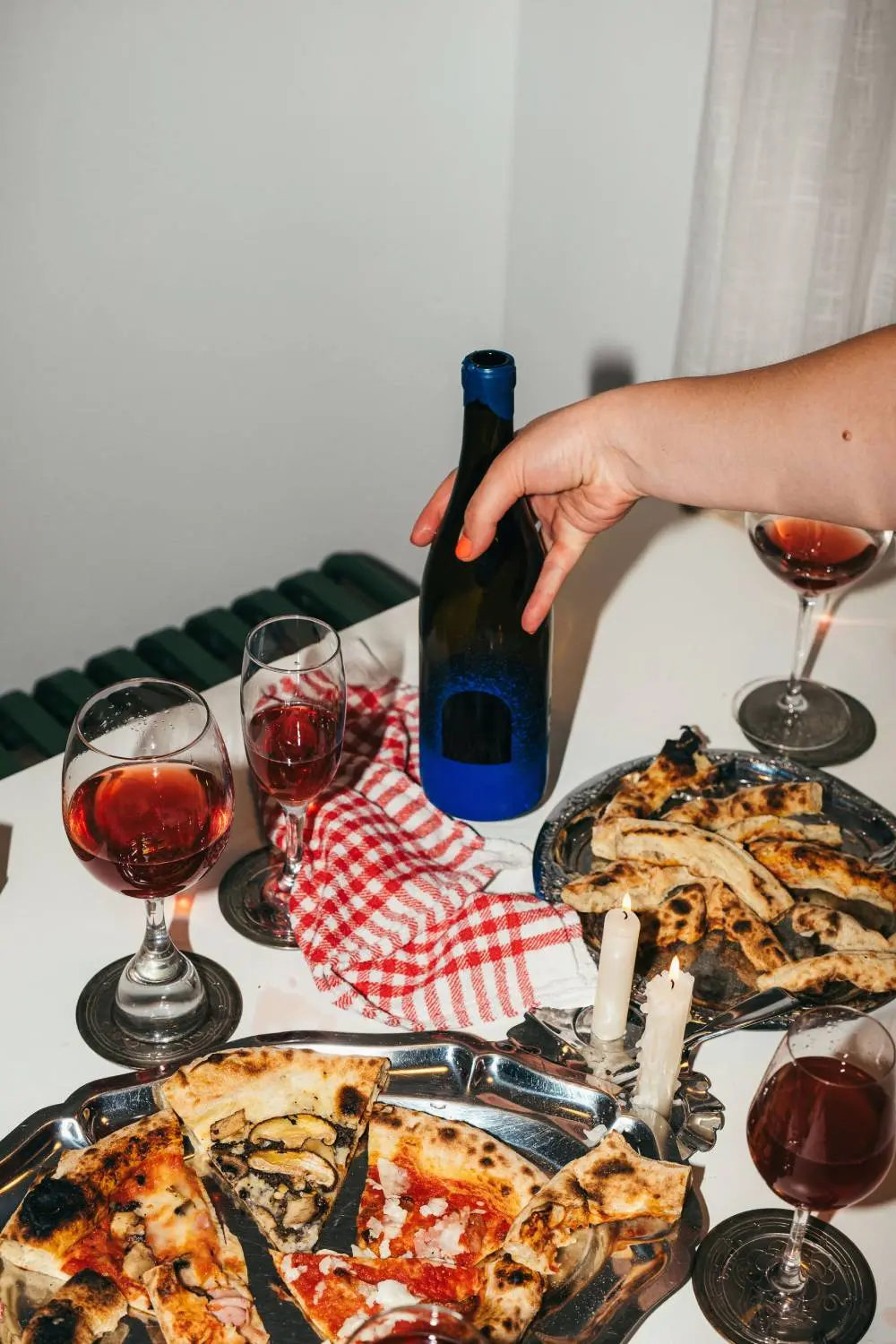
Don’t be fooled: we love our baby. We especially love it with a tapas meal, or a dessert spread. We love it with a pizza, or as a drinking wine (in a group of six). It’s not faulty or unstable, just a little bit feisty. But WIP is our firstborn baby – so we knew it was a test run. And since we are both the oldest sibling in our respective families, are allowed to say that.
THE STORY OF HOW IT WILL GO
For the next harvest, we have a few key adjustments in mind that will hopefully change the game.
Calm the f down! We are planning on spending more time in Arnes towards the end of the growing season so we can make the call with regards to the moment of harvest with a more holistic vision.
More skin contact! We will wait out the necessary amount of time, because we want to make a wine whose body is an accurate representation of its power. No glou-glou for glou-glou’s sake – not necessarily, anyway.
Check the bottles, check all the bottles. Make sure they’re at the same fill level before corking. Don’t rush the home stretch.
Invest in electrodialysis and chemical clarification so that we can correct away any imbalances or imperfections that may occur. … Just kidding, OBVIOUSLY.
All jokes aside, we are happy with our little Work in Progress, although we know it’s just that: a Work in Progress.
We’re learning by doing, friends.
We hope you enjoy it, and we hope you learn something from it too.